Papaoneone Beach (Turtle Beach), Makaha: access, conditions and safety
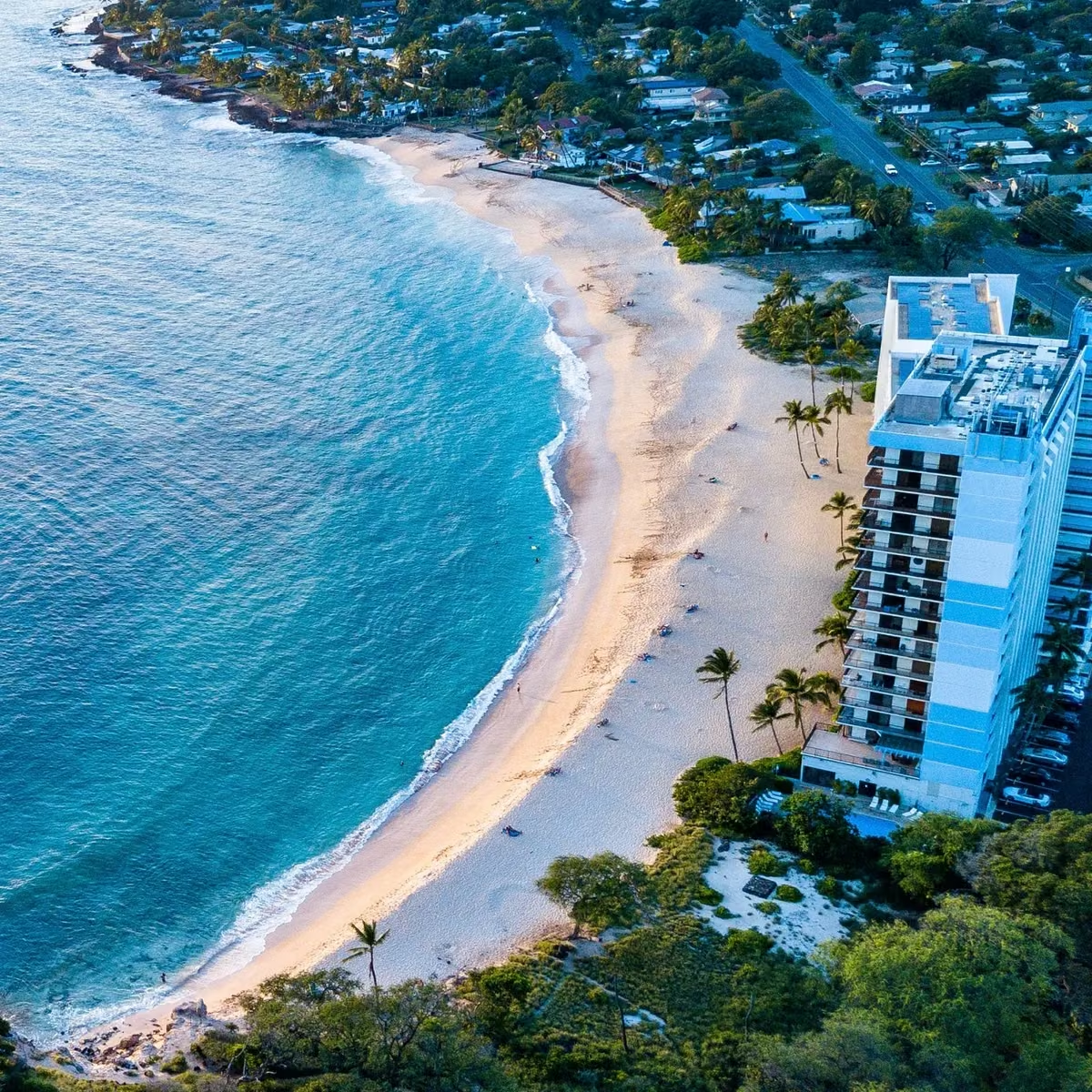
Papaoneone Beach is a wide, steep, white-sand beach in Makaha on the west side of Oahu. Locals often call it Turtle Beach. It is one of the nicer stretches of sand on the Wai‘anae coast, it is rarely crowded, and green sea turtles are seen there regularly. It is also a beach whose personality changes completely with the season, and it has a shorebreak that catches visitors off guard every year. This page is the honest version: what it is like, when it is good, and when to stay out of the water.
Where Papaoneone Beach is
Papaoneone sits in Makaha, in the Wai‘anae district on Oahu's leeward (west) coast, roughly 40 minutes' drive from Honolulu International Airport and about 12 miles up the coast from the Ko Olina resort area. It faces west, which is the single most important fact about it — it means the beach takes swell from the north and northwest directly, and it means the sunsets are straight out in front of you.
The beach runs in a gentle curve with rocky points at either end. The Hawaiian Princess building sits directly on the sand at one end; our condo there is on the third floor, so the view below is the beach itself.
Public access and parking
As with every beach in Hawaii, the shoreline at Papaoneone is public. Beaches in Hawaii are public up to the highest reach of the waves, so anyone can walk, sit and swim there regardless of what is built behind the sand.
Practically, though, this is a residential stretch of coast rather than a state park. There is no large public lot, no concession stand, and no lifeguard tower on this particular beach — which is exactly why the safety section below matters more here than it would at a guarded beach. If you are staying at Hawaiian Princess you park in the building's assigned stall and walk down; if you are staying elsewhere, plan on limited street parking and be respectful of residents' driveways.
Is it safe to swim at Papaoneone Beach?
Sometimes — and the honest answer is that it depends entirely on the day. On a calm summer morning it is a lovely swimming and floating beach. In winter it is regularly unsafe. The mistake visitors make is assuming that because the water looked fine yesterday, or because it looks fine from the road, it is fine to swim today.
Summer, roughly May through September
Usually the calmest stretch of the year. Many mornings are excellent for swimming, floating and snorkelling, and the water can be genuinely clear. Even so, the beach drops off steeply, so a calm-looking day can still produce a surprisingly strong wave right at the shoreline. Mornings are generally better than afternoons.
Winter, roughly November through March
North and northwest swells wrap straight into this west-facing coastline. Waves can become large, rough and unsafe for swimming, with strong currents and a powerful shorebreak. This is not a season for casual swimming here. It is, however, a spectacular season for watching the ocean from a lanai, and it is when the surf at Makaha is at its most impressive.
Spring and fall
Transitional and unpredictable. One day can be glassy and gentle; the next can be rough. These are the seasons where checking conditions each morning genuinely matters, because there is no reliable pattern to fall back on.
Understanding the shorebreak — the thing that actually hurts people
This is the most important paragraph on this page. The water offshore at Papaoneone can look fairly calm while the wave at the water's edge is doing something completely different. Because the beach is steep and there is no protective reef offshore, waves do not roll in gradually — they stand up and break hard in very shallow water, directly onto sand.
That is the mechanism that knocks people down and that causes neck, shoulder and back injuries at beaches like this one. It does not require a big day. A moderate swell on a steep beach is enough.
Practical rules that actually help: watch the water for several minutes before you go in, enter and exit between sets rather than during them, never turn your back on the ocean, do not let small children play at the water's edge unwatched, and give the rocky north end extra room because the current runs stronger there. Hawaii's ocean safety guidance specifically flags west-shore conditions as ones that can change drastically once winter swells arrive.
Why it is not like Ko Olina
Visitors often arrive expecting something like the Ko Olina lagoons up the coast. Papaoneone is a different kind of beach. The Ko Olina lagoons are man-made, sheltered, and calm almost all the time by design. Papaoneone has no protective reef and no breakwater, so it does not hold a dependable flat lagoon.
What you get instead is a far quieter, far more natural beach, with real surf, real sunsets and almost nobody on it. If your priority is guaranteed calm water for small children every single day of a trip, Ko Olina is the more predictable choice and it is a short drive away. If your priority is space, quiet and a beach that feels like the actual west side, this is the better one.
Turtles, monk seals and the rules
The nickname Turtle Beach is earned — Hawaiian green sea turtles (honu) are seen at Papaoneone regularly, both in the water and hauled out on the sand. Hawaiian monk seals, which are endangered, also come ashore on this coast to rest.
Both are protected under federal and state law, and the rule is simple: give them room and do not touch them. Standard guidance is to stay at least 10 feet (about 3 metres) from turtles and at least 50 feet (about 15 metres) from monk seals, and considerably further from a mother with a pup. If an animal changes its behaviour because of you, you are too close. Resting on the beach is normal, healthy behaviour for both species — an animal on the sand does not need rescuing.
Snorkelling
Worth doing, but only on the right day. Snorkelling at Papaoneone is best on genuinely calm mornings with good visibility, which in practice means summer. On a rough day the sand gets stirred up, visibility drops, and the shorebreak makes entry and exit unpleasant at best. If the water is not obviously calm, save it for another morning or drive to a more sheltered spot.
Sunsets and whale watching
Because the beach faces due west, sunset here is the main event, and it happens directly in front of you rather than off to one side. It is the single most reliable thing about the beach.
In winter — roughly December through April — humpback whales pass along this coast, and they are frequently visible from shore and from the upper floors of the buildings along the beach. Winter therefore trades away the swimming and gives you the whales and the surf instead, which is a fair deal if you know it going in.
Staying on Papaoneone Beach
Our Hawaiian Princess condo sits directly on this beach. It is a third-floor, one-bedroom unit that sleeps five, and the beach is a lift ride or a short flight of stairs away — there is no road to cross. In winter, when the water is rough, the lanai is genuinely one of the better seats on the coast.
If you would rather have more space and do not need to be on the sand, Hawaiian Home is our three-bedroom house in a gated community a short drive inland. It sleeps 10 and has a fenced yard and a community pool, which is a more practical setup for a larger group or for families with small children who want a guaranteed-calm swim.