Makaha & Waianae: an honest guide to Oahu's west side
The west side of Oahu is the part of the island most visitors never see, and the part that people who love it are quietly glad stays that way. It is drier, sunnier and emptier than the rest of the island. It is also a real, working local community rather than a resort strip, and that is the thing worth understanding before you book. This guide is the version we would give a friend: what it is genuinely like, what it is not, and who it suits.
Where Makaha is and how long the drive really takes
Makaha sits in the Wai‘anae district on Oahu's leeward — west — coast, near the end of the road. From Honolulu International Airport (HNL) it is roughly a 40-minute drive in normal traffic, heading west on the H-1 and then up Farrington Highway along the coast. Ko Olina, with its resorts and man-made lagoons, is about 12 miles back down that same road, which makes it an easy afternoon trip rather than a commitment.
Two practical notes. First, there is essentially one road in and out along this coast, so an accident on Farrington can add time in a way a map will not predict — give yourself a buffer heading to the airport. Second, Waikiki is about an hour away depending on traffic. That is close enough for a day trip and far enough that you will not do it casually, which is rather the point of staying here.
What the west side is actually like
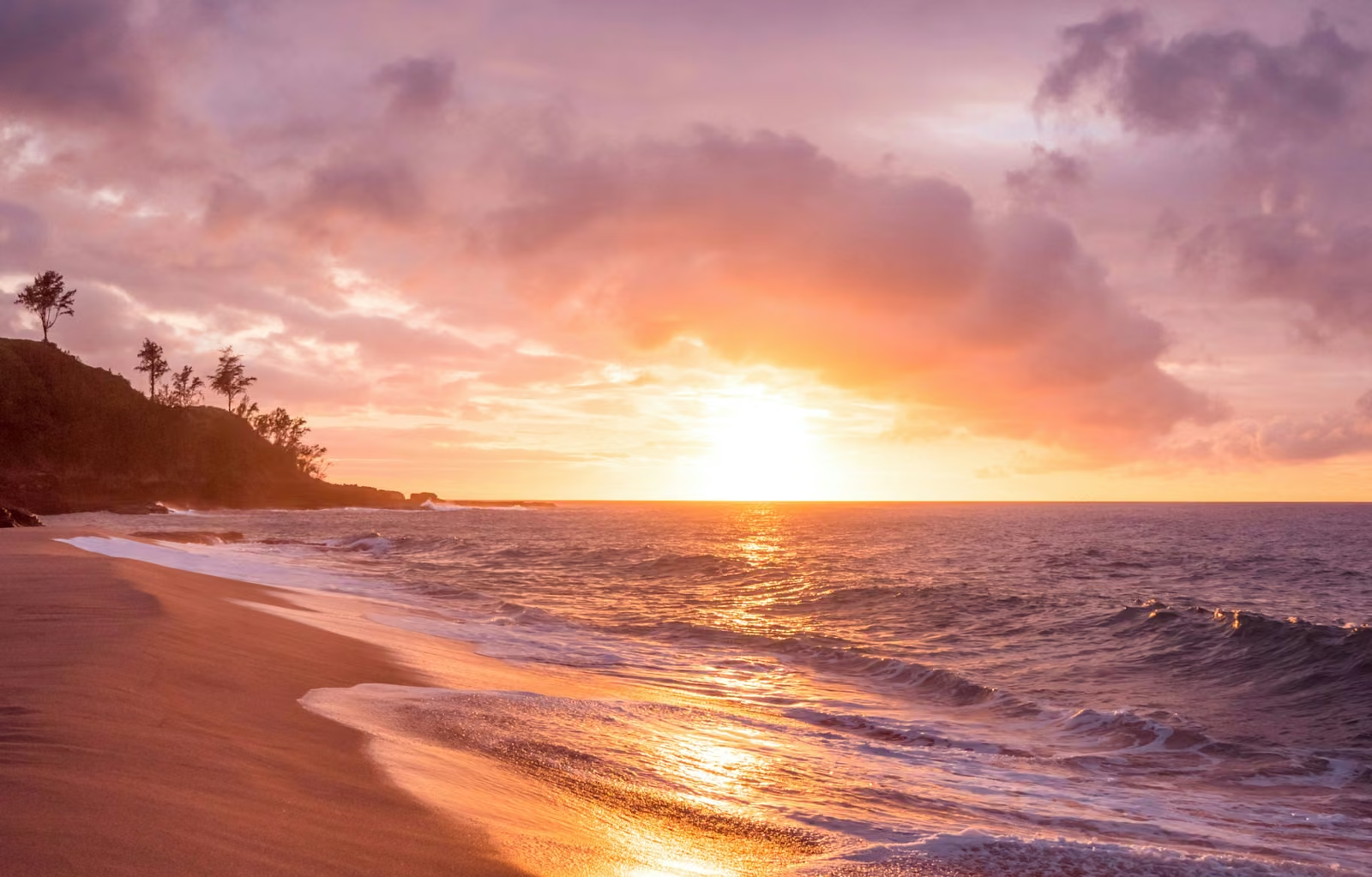
The leeward coast is the dry side of the island. It gets markedly less rain than Honolulu or the windward side, the mountains behind it are steep and dramatic, and the beaches face directly west, so sunset happens in front of you rather than behind you. In winter, humpback whales pass along this coast and are regularly visible from shore.
What you will not find is a resort strip. There are no high-rise hotels, very few restaurants, no nightlife to speak of, and no shopping to do. The beaches are largely empty on a weekday. If your idea of a Hawaii holiday involves walking out of a lobby into a row of bars, this is the wrong coast and you will be disappointed. If it involves an empty beach, a barbecue and a sunset, this is close to the best version of it on Oahu.
Is Makaha safe for visitors?
This is the question people actually want answered, so here is a direct answer rather than a marketing one.
Yes, with ordinary sensible precautions. The Wai‘anae coast is a residential, largely Native Hawaiian and local community. It is not a tourist zone, and it has real economic hardship — the west side has one of the higher rates of poverty and houselessness on the island, and you will see that, particularly in the beach parks and along the highway. Being visible is not the same as being dangerous. Visitors are not targets here, and the overwhelming majority of people you interact with will be friendly if you are.
The practical risk to a visitor on this coast is property crime, specifically car break-ins at beach parking areas — which is true of nearly every beach on Oahu, including the famous ones. The mitigation is the same everywhere: leave nothing visible in the car, leave nothing valuable in it at all, and do not leave your bag unattended on the sand while you swim.
How to be a good visitor here
The more useful framing than "is it safe" is "how do I not be a nuisance", because this is somebody's neighbourhood rather than an attraction. A few things genuinely matter:
- Do not park across driveways or on private property. Parking is tight and residents need to get out.
- Keep noise down at night. These are homes, not a resort.
- Take your rubbish with you, including from the beach.
- Give people space at surf breaks. Makaha in particular is a serious local break with deep history, and the lineup is not the place to learn.
- Be friendly and unhurried. A wave and a thank-you go a very long way on this coast.
Do that and you will have a completely uneventful, genuinely lovely stay. It is what most of our guests report.
Makaha vs Ko Olina vs the North Shore
These three get compared constantly, and they suit different trips.
Ko Olina is the manicured option: four man-made lagoons with calm, sheltered water almost every day of the year, plus the resorts, restaurants and a golf course. If you have small children and want guaranteed flat water on demand, Ko Olina is genuinely the better answer, and it is 12 miles away, so you can stay in Makaha and drive there for a day. What you trade is atmosphere and cost — it is busy, and it is expensive.
The North Shore has the famous winter surf, the food trucks and Haleiwa. It is also roughly an hour and a half from Makaha, gets extremely congested in winter, and is wetter. It is a great day trip and a frustrating base.
Makaha is quieter, drier and cheaper than both, with better sunsets and far fewer people. The trade is that you must be content with your own company, you will cook more than you eat out, and the ocean is a natural beach rather than a lagoon, with all the seasonal variability that implies.
Best time of year to visit the west side
The west side is pleasant year-round, but the two halves of the year offer genuinely different holidays.
Summer, roughly May through September, is the swimming season. The ocean along this coast is at its calmest, mornings are frequently excellent for swimming and snorkelling, and the weather is hot and reliably dry.
Winter, roughly November through March, brings north and northwest swells that wrap into this west-facing coast. The surf gets big, the water is often unsafe for casual swimming, and the beach becomes something to watch rather than swim in. In exchange you get whale season, the most spectacular sunsets of the year, and the coast at its emptiest. It is a genuinely good time to come if you know what you are coming for.
Spring and autumn are transitional and can go either way from one day to the next. Our Papaoneone Beach guide goes into the seasonal ocean conditions in much more detail, including the shorebreak, which is the one thing on this coast that deserves genuine respect.
Groceries, food and practicalities
Plan on cooking. There is a supermarket and the usual convenience stores along Farrington Highway in Wai‘anae, and there are local spots worth finding once you are here — but the density of restaurants is a fraction of what you will find in town, and options thin out in the evening. Most of our guests do a proper shop on the way in from the airport, which is the right instinct: both of our places have full kitchens and everything you need to cook, so a supermarket run at the start of the trip saves a lot of driving later.
A rental car is effectively required. Public transport exists along the coast but it is not a practical way to run a holiday here, and taxis and rideshares are scarce this far out.
Things to do nearby
The west side itself is about the ocean: swimming and snorkelling in summer, watching the surf in winter, and sunsets year-round. Makaha has a legendary surf break with real history in the sport, and there are surf schools operating along the coast for people who want a lesson somewhere gentler. Wai‘anae has a small boat harbour, and sport fishing and dolphin-watching trips run from this side of the island. There are two public 18-hole golf courses close by.
Further afield, most of the island is within a day trip: Ko Olina's lagoons at 12 miles, Pearl Harbor on the way into town, and Honolulu, Diamond Head and Waikiki about an hour out. Kaena Point, the wild northwestern tip of the island, is at the end of the road past Makaha and is a superb walk if you take water and start early. Our full things-to-do guide covers all of this in more detail, including who to book fishing and dolphin tours with.
Where to stay in Makaha
We have two places on this coast, and they suit genuinely different trips.
Hawaiian Princess — beachfront condo, sleeps 5
Hawaiian Princess is a one-bedroom, third-floor condo sitting directly on Papaoneone Beach. There is no road to cross — a lift ride or a flight of stairs and you are on the sand. It suits couples, small families and anyone whose priority is waking up to the ocean. The building has a pool, a hot tub, gas barbecues, tennis courts and 24-hour security.
Hawaiian Home — gated-community house, sleeps 10
Hawaiian Home is a three-bedroom, two-bathroom house in a gated community a short drive inland, with a fenced yard, a two-car garage, a covered lanai built for barbecues, and access to a community pool, hot tub and fitness centre. It sleeps 10 and suits larger groups, families with young children who want a guaranteed-calm swim, and anyone who would rather have space and a yard than be on the sand.
Frequently asked questions about Makaha and Waianae
Free download
51 things to do near your Makaha getaway
Everything on this page, plus beaches, hikes, luau, local food, and the day trips worth the drive — 51 spots in one printable guide, organized the way we'd tell a friend. No sign-up, just download it.
Download the free guide (PDF)35 pages · 3.6 MB · from Fred & Linda